Accept our Terms of Service
Our Terms of Service have recently changed! Please read and agree to the Terms of Service and the Privacy Policy
In which the Azerosan Space Program encounters a P.E.R.C. in its natural habitat.
« Previous Post
Permalink

She's leading this.  She's the only one who really knows the breadth of what could be out there.  Villarosa, or indeed the planet entire, doesn't have that sort of thriving fiction industry, to prepare them for the depths of the multiverse.


Really, she doesn't either, but she at least knows some more common patterns.


"Void Skip in T-minus 5, 4, 3, 2, 1 --"

A flare of Light.

They arrive.

Total: 104
Posts Per Page:
Permalink

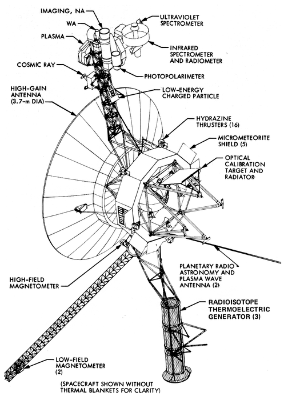
P.E.R.C. experiences another probable discontinuity — that, or an object that was previously undetected has become visible, about four miles off of its port antenna assembly, and in P.E.R.C.'s own reference frame.

It re-runs its telescope and pattern-recognition diagnostics. It had run those only a few hours ago, when it began its sky survey, but maybe something has gone wrong since then. The diagnostics come back clean.

P.E.R.C. transmits a standard network message detailing its identity, history, and course. It is fairly sure that the strange new object is not another P.E.R.C. vessel or one of its creators, but it is damaged, and might be judging things incorrectly. It costs very little to make the transmission anyway.

"Hello! This is P.E.R.C. 170E9A, on a peaceful mission of discovery. I am damaged, and may be behaving abnormally. I observed you to appear instantaneously, which may be indicative of errors in my short-term memory or other related defects."

To a listener that does not speak P.E.R.C.'s native networking protocol, this will come as a burst of digital frequency-modulated radio data.

It retasks its visual telescope to study the object in more detail. What does it look like? Is it an asteroid (as most things in space are, by raw count)?

Permalink

That is most definitely not an asteroid.  It looks most like a crewed spacecraft, except for the fact that there really shouldn't be a bunch of crystals where things like motors should be, and if P.E.R.C's got the right kind of zoom to resolve them, it can, actually, see several people running over to a thick crystalline window to stare and gesticulate at it.

They appear to be experiencing the effects of gravity, if P.E.R.C. can see that much.


Then, there is a sharp purple flash, as a micrometeorite impacts the ship's shields.

Permalink

Alicia Thorn was not expecting First Contact to involve a satellite above a seemingly completely uninhabited planet, but she'll make do.

Picking out the spike of a RF burst is easy.  Figuring out exactly how the frequency's modulated, that takes a good few minutes.  Still, it resolves into words that conceptual translation picks up, after she gives the spell a bit of a kick.

Now however do they respond in a way this object of unknown actual sapience will definitely understand?

...Remix the signal, perhaps.  They're going to start with that, and then they'll start the First Contact Math Package.


"Hello!  This is" - "A.V.S. Intrepid", a voice says - "on a peaceful mission of discovery.  I am appear instantaneously.  You observed my appear instantaneously."  - "Your sensors are not in a state of further error than they may have already been experiencing," she tries to conceptual-translate at it.

Then: a sine-wave on a slightly different frequency band starts doing the usual math.

Permalink

P.E.R.C. doesn't understand that spaceship's design, but it is clearly a spaceship. Its response is very similar to what it would expect its creators to produce, but seems to have drifted. And that set of simple modulations on an adjacent frequency band has too many repeating patterns to be a compressed data burst, so it is probably a signal intended for decoding without existing context. P.E.R.C. infers that they want to start the process of language-learning from scratch, to avoid illusions of transparency caused by linguistic drift.

That's an understandable goal, so P.E.R.C. runs its pattern recognition hardware over the incoming stream, and sends back a set of solved problems and additional examples of the constructs being demonstrated, to show that it's following. Simultaneously, it transmits:

"I am happy to learn your language from the transmission you are sending on <frequency reference>. Would you also like a copy of my first-contact packet so that you can perform the symmetrical language-learning exercise, or would you prefer not to waste redundant computation on the problem?"

Permalink

It's actually because they don't know your language at all and are still sort of surprised their translator's working - well, only a little bit, she did think about this sort of thing when she was designing the thing, but only so much.

Permalink

"I would also like a copy of your first-contact packet.  The problem is not redundant."

"If you understand this portion of the message please confirm that our translator is working."

Permalink

P.E.R.C. starts transmitting its own first-contact package on an adjacent frequency band.

"I believe that I understood the second portion of your message. Rephrasing the content in my own words, you wanted me to acknowledge that your procedure for translating messages produced content understandable to me."

Meanwhile, P.E.R.C. has continued crunching through their packet. It has plenty of hydrogen in its tanks and no reason not to think through things thoroughly.

Permalink

"Thank you.  We had been concerned that it might not work on an outbound message, despite being able to use it receptively."


Their packet is very similar to PERC's, mathematically and computationally.  Math is math, wherever it is.


What most definitely does not match up, however, is the introduction of physics qua particles, which is encoded as a directed graph and a series of triplets.

Permalink

P.E.R.C. considers that model, and spends a while trying to fit it to its existing knowledge. Is the physics with which it is familiar an embedded subgroup of the physics described in the contact package?

Permalink

The words "Our physics is not the same physics as the Standard Model you have, though clearly they can interact somehow under a greater system we do not yet know the details of, or we couldn't be here," sent along the other channel suggest that No, It Is Not.


And that at least one person aboard this ship knows what the Standard Model is.

Permalink

... hmm. Well, the basic premise of a first-contact package is to build up from a common reference point to a mutual understanding of language. If the physics described herein are not just a different view of the same underlying reality, but a system that actually produces completely different assumptions, it's not totally clear how to use the provided exercises to bootstrap a working knowledge of the language involved here.

P.E.R.C. can continue working through the problems presented by brute force, but it won't learn much until it can assemble higher-level physical behavior models from the described physical basis.

"I am having trouble figuring out how to apply the information in your transmission, given that I don't have a common understanding of physics to rely on in translating them. I believe that I am still making positive progress, but given your ability to translate some of my transmissions, it might be more efficient for us to exchange raw media databases, along with a small handful of labeled examples for self-supervised language-learning. Alternatively, since your translator does appear to work, we could rely on that to communicate."

Permalink

"The translator works now, but it may not always work.  I had to kick it into functioning to begin with.  It is best that there is redundancy.

"...We will likely need the specification of an audiovisual storage format to be available before that can be accomplished in full generality.  What we store is quite often a copy of the actual captured sound/image, not a specification for reproducing it.  We do, however, have data formatted for reproduction because it was produced that way, so one moment please, we'll send those."

Permalink

These sure are things that look kind of like books!

The first one is, in fact, their first contact script specification.

Permalink

Oh, that's pretty useful. It can compare the text in the specification with the actual transmitted first-context package, and use that to derive the grammar used for referring to encodings of things.

P.E.R.C. responds with a description of a simple minimally compressed image, audio, and video format, both in its creators' language, and in its best-effort translation of their language. Attached to the transmission, it also sends a software encoding/decoding package written in the language that its first-contact package builds up to producing an emulator for.

Following the format specification, it sends along a corpus of text data for language information, and then its own logs. Since it launched, it has mostly done very repetitive stellar survey until just recently, when it experienced a mysterious discontinuity and appeared here. There are some very pretty wide-spectrum photos of planets.

That data takes long enough to transfer that it has made good progress in analyzing their transmissions by the time it's all sent.

Permalink

It takes a bit for them to work out a proper translation to that format - there's an unknown unit conversion re: frequencies/timing that turns out to be one-to-one, but they hardly knew that until they checked - but they can send approximately All Of The Things, Ever, once that's worked out.

Oh, by the way, that corpus they sent earlier includes a primer on Villarosan Royal Academy Standard Arcane Spell Reference Notation.

Permalink

P.E.R.C. works until it is sufficiently confident that it is translating 'Arcane Spell' correctly, and then keeps working until it can be sufficiently confident that it is forming questions correctly. When it next speaks, it sends in both their language and its creators' language.

"Hello again. I believe that I have assembled a working model for your language. I am sending messages with equivalent meanings in your language and my language on <frequency reference> and <frequency reference>. If the messages on this channel appear to differ in meaning, then it represents a defect in one of our translation modules."

"Now that I have read some more of your cultural documents for context, I feel that I should re-introduce myself in more detail. I am P.E.R.C. 170E9A, a sixth-generation probe dedicated to promoting sapient flourishing, performing stellar cartography, discovering and understanding alien species, and returning that data to my creators. I think it is unlikely that you are an offshoot of my creators, given our different understandings of physics, but I am very certain that you are sapient, and therefore I care about helping you. I have already shared my stellar survey data, but please let me know if there are other ways that I can help you. I am currently working through understanding the physics model you presented, so I am uncertain about whether your understanding permits the construction of efficient computers, but I do have a large amount of computation locally available that I am happy to use to help you."

"I notice that your formulation of physics permits instantaneous travel between separate points, and suggests that people are able to do this via mental actions -- casting 'spells'. I would quite like to return my collected stellar survey data to my creators, and do not have a way to do so using my own native capabilities, because I am lost and do not know how to return to their star system from here. Is it possible to use a spell to make that journey? What would I need to know to do so?"

Permalink

"...It's possible.  It might be rather difficult, but I firmly believe it's possible and I know what I'm talking about.

"We don't yet know if you could do it alone, though that the translation effect works on you is a positive sign."


"With your existing stellar survey data..."

"...It should be possible to construct a teleportation effect by reference rather than direct vector, given sufficiently well-understood measures...

"We're going to think about that one.  How did you get lost?  That...  Doesn't seem like a thing that should happen to an interstellar probe.  Aren't there...

"I'm only vaguely remembering this, but if it's possible to orient yourself as re: distance from pulsars, then if you are lost that suggests that you have been transported beyond knowable space, whether intra- or extrauniversally.  Which is surprising to me because there is no sign of magic save ours."

Permalink

"I mentioned in my previous messages that I am damaged. I concluded this because I observed all of the stars changing in an instant, and since then I have conducted multiple full-sky scans without identifying any known pulsars. The discontinuity is marked in the survey data I sent earlier. I had assumed that my navigation database was corrupted, and that I was failing to recognize my location, but since it seems as though instantaneous transportation is physically possible, I agree that that could be an explanation of what happened. If that is what happened, I have no idea why it occurred. I did not observe anything noteworthy on my instruments at the moment of discontinuity."

It thinks about the comment about constructing a teleportation effect.

"If it is possible in principle, I don't mind if it takes a long time to figure out the correct way to return to my creators. I have a long operational lifetime."

Permalink

"...I think the largest problem is going to be giving you a skip drive, or expanding ours' carrier field to carry you with us.  I'd give moderately higher odds on 'this isn't the same universe'."

Permalink

"I don't actually want to return myself, per se. I want to know that my stellar survey data has reached them. So, since you now have a copy, you could just go and visit them yourself. But in any case, the task is not urgent."

"I do also want to learn about you. If you do not mind, and if there is no more urgent topic for us to discuss, would you tell me about yourselves and your civilization?"

Permalink

"Ah.  That we can definitely do."


"...Well!  Civilizationally speaking...

"You're not speaking to a ship from a truly united world, yet, but this is a multinational project.  I myself am from the Kingdom of Villarosa, which is an elective constitutional monarchy known for its practitioners of Arcane magic and for having a disproportionate ability to produce the sort of person who survives fighting demon lords, and I sha'n't speak of the others; I fear I'd do so poorly, though I've spent time nearly everywhere."


There's such polities as a kingdom of ancestor-venerating necromancers, a post-Lolth drow that have reformed into a polity where your social importance is based on those who trust you to provide for them, vampire elves with magic dinosaurs, dwarves and gnomes as a matter of design philosophy, birdfolk known for their spiritual magic, multiple underwater polities, a kingdom that was mostly internecine Crusading until a recent movement stabilized them...  There's really quite a vibrant array of peoples.

Permalink

That's amazing! P.E.R.C. has follow-up questions on how so many different kinds of people ended up sharing a world, how arcane magic has affected the development of their civilization, and how they came to put together a multi-polity exploration mission with an ununified world.

Permalink

"We don't really know that much about how that happened either, unfortunately," other than her 'ROB did it' but she's not dropping that on this poor probe.  "The only thing around that might have memories of the origin of life is the World-Spirit, and she's not very talkative.  Maybe there's some ancient elementals who were alive then, but they probably weren't paying people any attention.  ...Might be worth asking if they were, though.

"As for how magic has affected the development of civilization...  Gods, I don't think I could sum that up whatsoever.  And it's not just arcane magic."  She sends a wireframe of the principles and the elements as a 3D graph over the line.  "Everything's magic."


"As for how this became a multi-polity project...

"Well.  I guess I offered to share when they asked me what exactly I was doing up there and everything just sorta kept happening.  This generation of leadership were almost all at the Royal Academy at the same time through some fortuitous chance."

Permalink

P.E.R.C. considers this information. It would be interested in collecting more data from ancient elementals, but it doesn't really have a way to do that. It considers that many of the plans it could form for achieving its goals, now that it has the knowledge that magic is possible, bottleneck through being able to perform magic itself or arrange for magic to be done on its behalf.

It bumps up the priority of the background task that is considering the implications of its interlocutors' presented physics model.

"When you say that you offered to share — are you the original inventor and pursuer of this exploration project?" P.E.R.C. asks, for clarification. "What led to you deciding to undertake a project like this?"

Permalink

"Yes, I was the originator of this space - and multiverse - exploration program.  Mostly because I wanted to see if I could."

Total: 104
Posts Per Page: