Accept our Terms of Service
Our Terms of Service have recently changed! Please read and agree to the Terms of Service and the Privacy Policy
Merrin trying to survive on a dangerous exoplanet
+ Show First Post
Total: 476
Posts Per Page:
Permalink


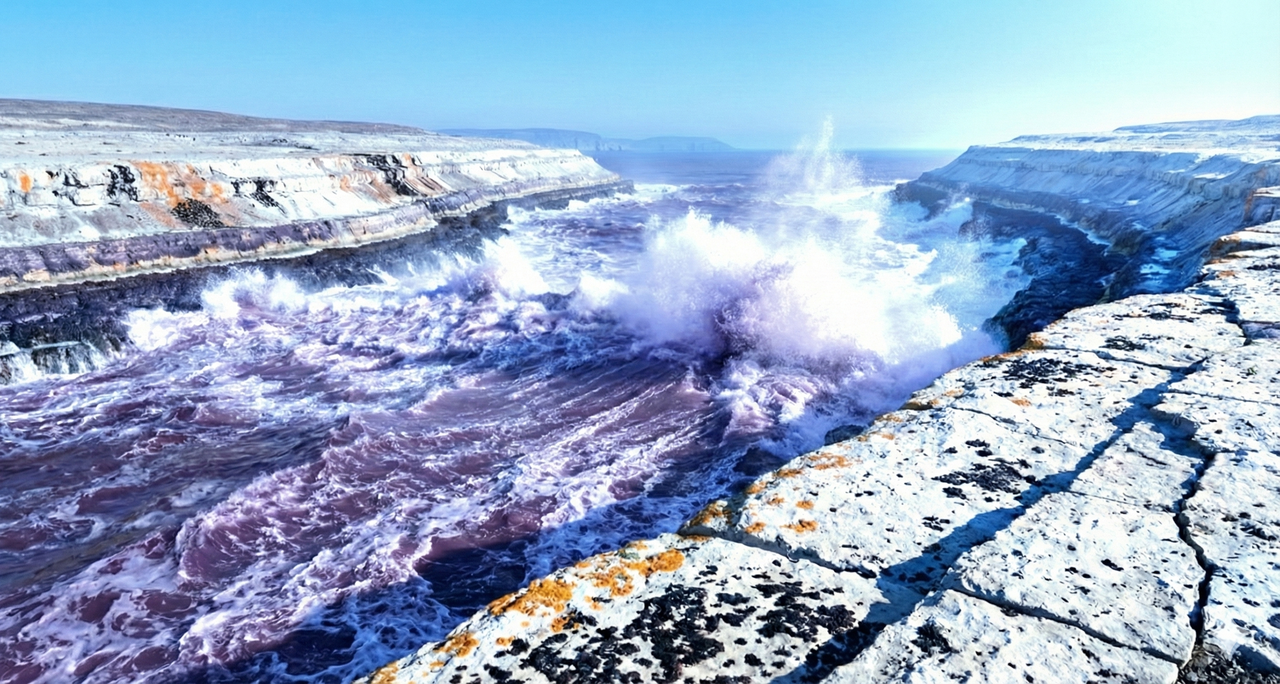
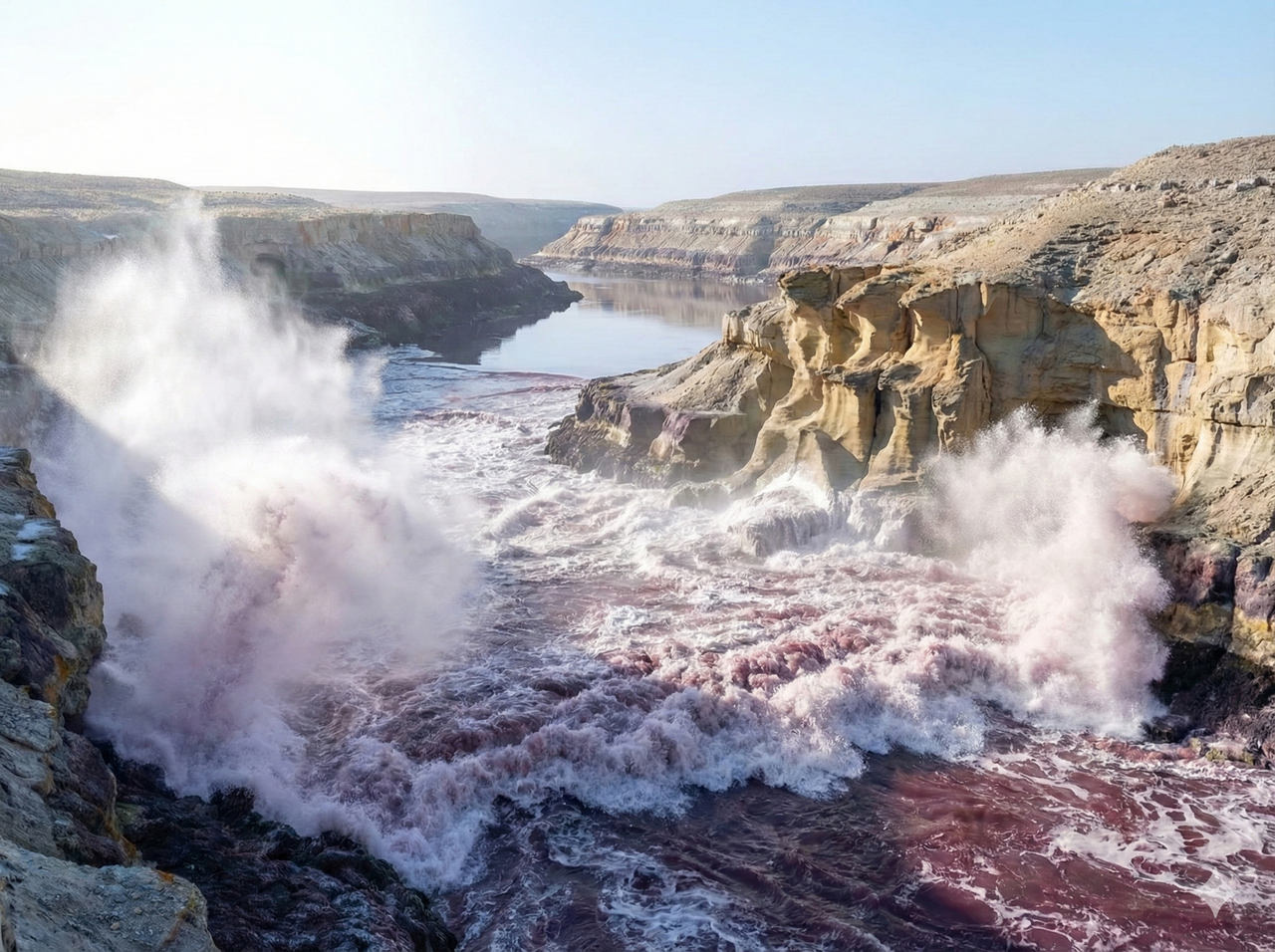
[AUTHOR'S NOTE: please ignore all the ways in which this image is not quite physically plausible, this is attempt #6.] 

Permalink

....Eeeeeeeep.

Merrin is very, very glad that she knows enough about a hundred kinds of basic planet-related science to have predicted that the tempting cave is, in fact, a DANGER CAVE.

Permalink

It's actually pretty majestic and epic and awesome to watch, and all that. Given that she survived it. 


(Merrin spends a little while wondering whether having just barely made it is evidence that the Literary Tropes Theory is applicable to her situation and the universe is, in fact, trolling her, before she concludes that it's stupid to be wasting mental cycles on that right now.) 

Permalink

The wave settles. It's not yet high tide; the water level is more than halfway up the limestone banks and still rising, with the incoming tidal current completely overwhelming the underlying river current flowing the opposite way. 

Her suit temperature sensor picked up a peak of 29.3° C – and coinciding with almost 60% humidity, from the giant evaporating tidal-flats surface, meaning the calculated dry-heat-equivalent for predicting heat stress without the suit was 37° C. But the sun is sliding down the sky, and the inrushing water brought some cooler wind with it, and the temperature is now past its peak, down to 26.6° C and will, presumably, continue to drop.

Merrin missed her chance to mark solar noon on her sundial - or measure the exact highest angle of the sun - but at a guess, noon was a bit over two hours ago, so about 14 hours after dawn, and sunset will be in 12 hours. And then there will be a long winter night of unknown duration, and the temperature will drop, and drop, and probably reach a low of around -40° C just before dawn. 

Permalink

...Which means that the 24h average temperature would be below freezing. 


Why is that relevant? Because seawater should (slowly) approach the average seasonal air temperature.

Merrin does have some other guesses now about what explains the lack of visible giant icebergs; the tidal turbulence would dash them to pieces, and fragmented sea ice would both be difficult to see in the distance and also much faster to melt in the heat of the day. (The lack of snow on the ground is no longer confusing. For all she knows, it did snow a week ago, but if the temperature spikes to a high 30° C each day cycle, snow on the ground wouldn't even last a single day; it would melt into water, flow away into cracks and hide out there contributing to rock weathering, and mostly end up right back in the ocean.) 

...But another thing about seawater, especially when the shallower and deeper layers are undergoing such thorough mixing, is that it lags behind the seasonal temperature. If the planet had no axial tilt and this latitude was always its current "season" - which, Merrin is realizing, is not in principle impossible, a zero-degree axial tilt and a high polar latitude could result in the sun-angle she's observing? - but if that were the case, the sea ought to reach an equilibrium at around -5° C. 

And she can confirm, with her suit data, that it's not that cold and somehow liquid anyway. She was getting readings between 1° and 3° C. 

One very obvious explanation is that this is winter, as opposed to summer, and that in summer the average temperature is significantly higher, and right now the ocean with its enormous heat capacity is still slowly cooling after last summer's heat, and won't quite get down to a below-zero average before it's spring and the temperatures are rising. 

Permalink

....Which, if true, is a fact that predicts very serious problems for Merrin in...some fairly large but unknown number of planetary days (she doesn't know how long the year is.) 


The problem is that right now, the average daily temperature is below zero - unless the rate of heat loss is really nonlinear, Merrin was admittedly doing Stupid Approximate Math and should instead, like, get a full day and night trend and then graph it and get the actual area-under-the-curve - anyway, the low is further below zero than the high is above zero, and the high is still hot enough that, without her suit, she would not be able to do any serious physical labor without risking heatstroke. 


The peak summer temperatures on this planet could easily be another twenty or even thirty degrees higher, and that's flat-out not survivable even for a few hours a day. 


Permalink

...But, of course, today Merrin's most immediate-term survival threat is the winter night and the cold.


Which means she cannot afford to waste any more time resting. She'll have at least thirty hours of night to rest, later. Right now, she needs to be frantically using the remaining hours of sunlight to generate power, and erecting an insulated shelter soon so it's starting out full of warm air and will cool more slowly than the ambient temperature... 

Permalink

Merrin's gear has, again, been heavily optimized, with a huge number of specialized labor-hours from dozens of different fields of expertise going into filling a storage crate with 18 kg of as much utility-across-a-wide-range-of-possible-situations-including-unlikely-ones as they can cram in. (And many of those experts were having a lot of fun with it.) 

Most relevant to Merrin's current purposes is the modular solar power array. Four panels, both remarkably lightweight and remarkably durable; they wouldn't survive a tree falling on them but they would survive falling off a cliff, and being rained on won't even inconvenience the setup. (She might have to leave it up at her camp to generate and store power while she went off to rescue a casualty, and what if there was a sudden rainstorm while she was away!) The protective coating is extra-slippery, and most dirt or dust will slide right off it. There are six different standardized, documented configurations to use it in, ranging from "in treetops" (if she's in a forest and the ground gets minimal sunlight) to "in four different locations, with localized power storage" to "arranged on the back of her suit to power it while she walks". 

Permalink

Right now Merrin just needs the most boring one. All four arranged in a square, tilted toward the sun's current descending angle. It's pretty much ideal circumstances for solar power generation, at least: clear sky, no obstacles to block the sun before it sets. There's some wind, up here on the rocky plateau, but not enough that she needs to do anything fancy to secure the panels. 

(Though Merrin really should try to do some mental climate modeling and figure out if this planet is likely to get regular hurricane strength gales. Not that she's going to be able to take any protective measures about that by tonight; she's barely going to have time to set up the basics.) 

Permalink

The sun and sky are cooperative. There are some cute fluffy clouds on the horizon out over the ocean, but they don't seem to be in such a hurry to blow in that they'll catch up to the sun before it sets in...still probably more than eleven hours. Maybe the clouds will catch up; the longer day is going to be throwing off Merrin's instinctive judgement on that sort of thing. 

Permalink

There is not actually anything Merrin can do to optimize over whether the sun goes behind cloud cover before it sets, so there's not much point thinking about it. She'll get the power she gets, and she should have empty battery storage to actually keep all of it, so that's better than turning it directly into stored oxygen if she doesn't know what she's most likely to need it for yet. 

She'll definitely have enough to power the oxygen concentrator all night, just in existing stored battery power – she has two dath ilan days worth of battery power, so even if the winter night is forty-eight hours long, she would make it. And she thinks it probably won't be quite that long. She hasn't done the math properly yet, and would have to approximate it anyway since her measurement system was fully manual and she missed solar noon by being in the wrong place, but the "bite" of a circle that was the sun's arc above the horizon felt fatter than she would expect if the night were approaching twice as long as the day. 

Her suit has six hours of battery-power-at-max-heating left. It's stretched longer than she feared – she's been using it for sixteen and a half hours, it just wasn't necessary for heating or cooling for most of that time. 

The cooling overnight will be gradual, and might even be close to linear once the sun sets. If she makes a very rough guess that it'll cool down to 15º C by sunset, which feels plausible for a day on dath ilan in a desert (low heat retention in the atmosphere) where the daily high reached 30° C, and she also guesstimates the night duration at 40 hours, and makes an assumption that by the end of those 40 hours it will hit -40º C...


- ugh, she's too tired for math - if it were 10° C at nightfall (plausible, with the longer stretch of late-afternoon and early-evening) and the night were 50 hours, that would be a degree per hour. The temperature would hit -15° C halfway through the night, with 25 hours left to go. 

She can handle -15° C with nothing except her tarp shelter - she'll want to make the smallest-internal-volume configuration, so her body heat and the small amount of waste heat from a running oxygen concentrator go as far as possible - and a sleeping bag. The sleeping bag is rated down to -20° C even with no other shelter! The temperature inside a well-sealed sleeping-shelter compartment will lag behind the dropping air temperature, so even if the outside air gets down to -20° C twenty hours before dawn, it could take - ugh this needs math - it'll take longer. Some amount longer. She might only have to endure ten hours of an interior temperature below what her sleeping bag is rated to handle... 

...she can actually improve the insulation a bunch. She has six emergency blankets, the kind that are waterproof and have a super-engineered layer of insulation that weighs almost nothing and can be packed down to the size of a small drink container and is nonetheless very effective, and are lined with equally super-engineered reflective material to reflect body heat back at the person inside. She does not need them for wilderness first aid, right now, so she can instead line the entirety of her sleeping cubicle with extra insulation. 

It might be a pretty uncomfortable night. But she's probably not going to be freezing to death with more than six hours to go until dawn. 

Permalink

...Wait she forgot about wind-chill effects. Ugh, she’ll need to recalculate using a different effective-temperature with wind chill, in case it gets a lot windier than this overnight, out on the horribly exposed flat plain with no trees or vegetation to serve as windbreaks. 

She does, as a backup, have chemical heat packs. She would rather not use all of them on the literal first night, because they’re one time use and she can’t make any more unless she develops advanced chemical manufacturing literally on her own and that’s a lower priority than, you know, FOOD, and really she should just assume she has no more ever once the current supply is gone, since “in several years, if she first solves twelve more urgent impossible problems” is not germane to her current situation.

But she does have options. Costly ones, if she misjudges the wind chill and night duration enough, but she will very likely still be alive in the morning unless, like, a volcanic eruption gets her which would be really stupid and unsatisfying as the plot of a science fiction exoplanet-survival novel  that is not actually an argument, but in terms of direct physical causality, an unfortunately timed volcanic eruption is barely more likely than a meteor strike.


Merrin is already working on the shelter. She has a tarp, also very optimized – she can just use it as a sheet, 4m x 6m, but it comes with six different predesigned configurations that she can set up by arranging the lightweight aluminum tent-poles differently inside different color-coded sets of built-in tubes sewn in place, and one of those configurations is for a single-person capsule.

It's meant for confined spaces, more than "reducing internal volume", and she isn't really supposed to seal the thing as hard as possible for air-circulation reasons, but in this case she does not actually want to use the ventilation system it comes with, because the whole point is to keep the air inside exactly where it is and the air outside separate. It's not going to be airtight anyway, she won't literally suck all the oxygen out of the air, and she's going to be sleeping hooked up to extra oxygen.

The CO2 levels will probably get a little high. She can adapt one of the emergency-medical monitors to set off a loud alarm before it gets high enough to make her drowsy and harder to wake...

Permalink

The tidal bore wavefront is past, but that was just the initial water-turning-around getting hung up in the narrowed inlet. The tide is still rising, steadily now, maybe a meter an hour. 


And rising, as the sun sloooooowly moves down the sky toward the horizon. 


(Occasionally there's another, smaller wavefront, and the waterline approximates a step-function again and jumps by a meter within less than a minute.) 


The temperature is dropping, not fast but steady. The tide is still rising. 


And rising... 

Permalink

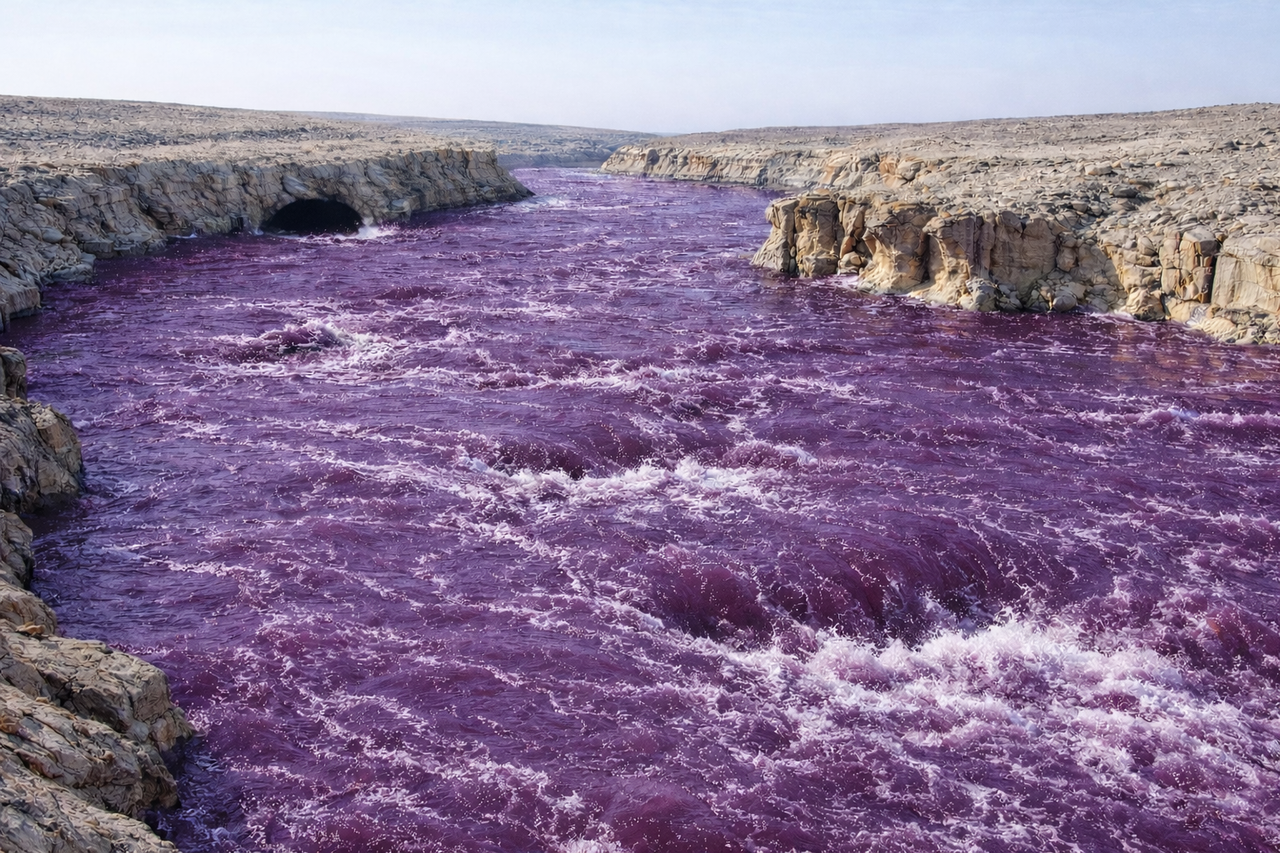
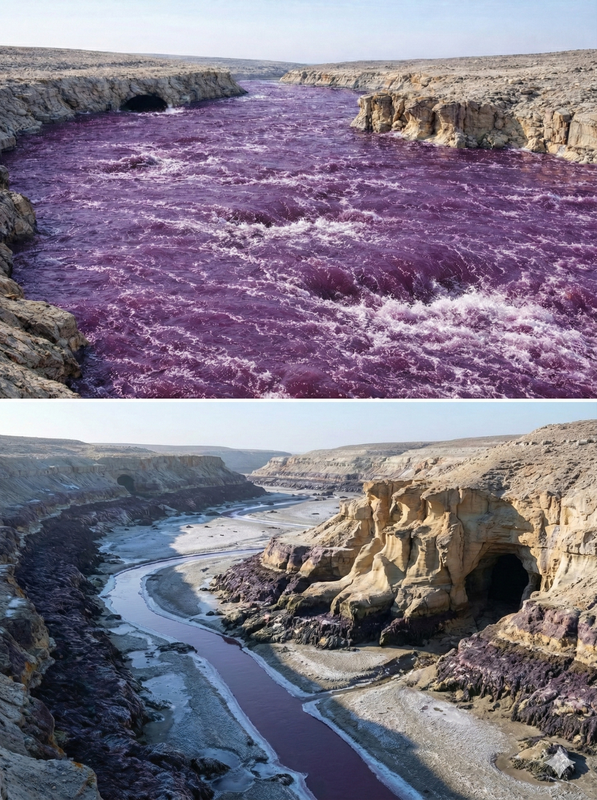
It almost looks like a normal river. Almost. Except that when you look closely, the current is wrong, there are too many eddies of weird turbulence, and also Merrin can clearly remember climbing like thirty meters up the erosion-stepped limestone valley walls, and looking down on the tidal flats and little winding river from a great height.

 Not just that, but at actual low tide the ocean was out of sight downstream.

And there are now less than ten meters between the waterline and the place where the valley walls give way to the to the more gently sloped shale plateau. 


She closes her eyes and pulls up the visual memory as clearly as she can, and then opens them and looks at the high-tide "river" again.

Permalink

Merrin looks down wistfully at the impassible wall of purple water. It's so purple! ...Her vague recollection is that in dath ilan, algae blooms tend to die off due to nutrient depletion of the water – the "dead zone" that results happens afterward, when all that biomass decomposes and thereby depletes the oxygen in the water, killing all remain oxygen-breathing heterotrophs that live there. The algae itself just needs light - and nitrogen and phosphorus. It makes sense, given the rapid weathering of the rocks here by the twice-daily massive tides, that the nutrients in the coastal waters are regularly replenished. The waters aren't ever deep enough that no light would reach the bottom, and in any case, any given cubic centimeter of water might well end up back at the surface next tide, with all that mixing, and the algae currently getting less light at the bottom can probably survive until then, and any algae that does die will decompose with plenty of oxygen, given the regular mixing.

So: no big algae die-offs. Extremely superheated purple water. 

Her final box of gear is down there. Was down there. She's not sure whether to dare to hope that it's where she left it. 

This planet is terrifying. Merrin would like to trade her mysterious post-True-Death-waking-up-somewhere-else scenario in and get a different, easier, starter-mode exoplanet, please 

Permalink

...She had better focus. This looks like high tide, but unrelatedly the sun is getting low in the sky and she probably has less than two hours of daylight left. And her shelter is finally assembled and lined with emergency insulated-reflective blankets, but it's not properly secured yet and there might be horrible nighttime winds to go with the horrible tides. 

She can't afford to use artificial lighting tonight, not knowing how many hours of night she has to budget her stored battery power for. So she had better finish everything while she still has natural light to work by. 


Merrin's shelter kit has a very advanced tent-stake system. With the right tools and power supply from the relevant crate, she could anchor her tent to granite bedrock. 

She does not think it's specced for stone that's been so weathered and cracked by the high UV and routine seventy-degree temperature swings that she can feel it trying to shatter under her feet. (She can walk, carefully, keeping her center of gravity exactly above the foot she's stepping down onto, but she wouldn't want to run.) 


For now she'll just rig up a temporary solution and anchor the guylines to her storage crates. It's not an ideal permanent solution since she'll want to at some point unpack them, but this isn't an ideal campsite anyway and she's going to be using most of the next endless long day to find a better one. Full, the set weighs over 200 kg. And she's effectively getting 20% more weight from the same mass, given the slightly higher gravity. Her own weight will be helping, too, and she's going to be sleeping with her armor right beside her in case she needs to get into it to survive the coldest part of the night. 

Permalink

With the sun floating just above the horizon, Merrin has everything secured, and it's time to pack up for the night. 


She puts away the solar panel kit in its box; the box is in use, as a weight, but the securing guylines are fastened under and around it - there are convenient harness points for carrying it - and it's upright, she can access it without problems. 

The solar generation system comes with four auxiliary rechargeable batteries, each with a capacity of 500 Wh* (and stored uncharged, unlike the main 5000 Wh battery which has a full charge, so far unused).

She has managed, with twelve hours of afternoon sunlight, to partially fill one of them. She missed the peak hours of sunlight, so that's not necessarily indicative of how much power she can generate and store given an entire planetary day without cloud cover, which is good because over that time period her suit has used more than 1500 Wh – and it's not even concentrating the supplementary oxygen she's been breathing, it's getting that from storage. 

She carries the 5000 Wh main battery unit into the back of the tent. And the auxiliary suit battery (only 400 Wh), to swap in if she needs more suit power to get through the night. And the partially charged additional battery cell, which will give her maybe another 300 Wh. 


*assume translation convention from whatever units dath ilan actually uses. 

Permalink

She unpacks the oxygen concentrator from the medical equipment box, and brings that into the tent, and connects it to the main battery – it has an internal battery but only enough to power a couple of hours of usage – and she switches it on. Conveniently, it has a backlit screen, though she can switch the display off later to save that tiny bit of power. 


...Right, and in all her approximate-math she'd been forgetting that she can run it at different settings. If she wants to generate 4L/min of oxygen, the maximum rate, it'll draw 180 W, and her battery will last...she can totally do math...oh right her hands are not busy now she can do calculator math (and also she has this in the written protocol somewhere but apparently not MEMORIZED, for that specific number, which makes sense because she is not sure she's literally ever had a training scenario OR a real scenario where her only power usage was oxygen and heating, normally she's using a lot more of the equipment to, you know, keep someone who's badly injured alive).

Highest setting is less than 30 hours. If she runs it at the very lowest setting, though, 0.5 L/min, then...in theory her battery ought to last over 100 hours, but at cold temperatures it'll be less efficient. Almost certainly still at least 70 hours? 

Her suit storage - it's a fully built-in oxygen "tank" that stores the equivalent of about 400L of O2 - is down to 15%. She could generate extra from the concentrator and siphon some off to refill it...but the medical compressor also uses power...and she would need to. Do more setup. Her equipment's default quick-setup protocol assumes that she's either running the oxygen concentrator at the rate her patient(s) need or replenishing her more portable storage, not trying to do both at once. And she's running out of light to do any setup. 

So not that. She'll breathe directly from the oxygen concentrator tonight. In the morning she'll either have to refill her suit's built-in tanks from the other medical oxygen canister, or do her siphoning-to-compressor setup and then park herself here for...a while...in the morning. Or not do as much wandering around. 

Permalink

...How much oxygen does she need? This is not, actually, perfectly clear from the rate of suit consumption. The suit is topping up the air she's breathing with exactly the additional oxygen necessary to keep the partial pressure at normal-for-dath-ilan, and so what she's used is almost exactly what her metabolism has burned over that period, with close to no waste. If she's breathing from a nasal cannula, there will inevitably be a bit of waste. 


Well. Time to get out of the suit and put a pulse ox on herself and spend a while calibrating. ...And set up the CO2 monitoring for overnight, before it's dark. That also uses power aaaaaaa Merrin has stupid problems because this is a STUPID PLANET. 

(She hasn't actually started generating oxygen yet; it's just on standby mode, which is very low power usage.)

Permalink

The outside air temperature was about 9° C, when she went into the tent. The tent itself was set up when it was hotter and has been absorbing sunlight-heat and is very well insulated; it's actually warmer than is really comfortable, reading at 24° C. 

Permalink

GOOD. Merrin will NEED THAT HEAT LATER. 


...She sits cross-legged on the insulated sleeping pad and stares at the number on the pulse ox. 

Permalink

Breathing ambient air, while sitting still not burning extra oxygen, Merrin's O2 saturation reading eventually drops to 89% and steadies out there. 

Total: 476
Posts Per Page: